




 Shraddha Diwan
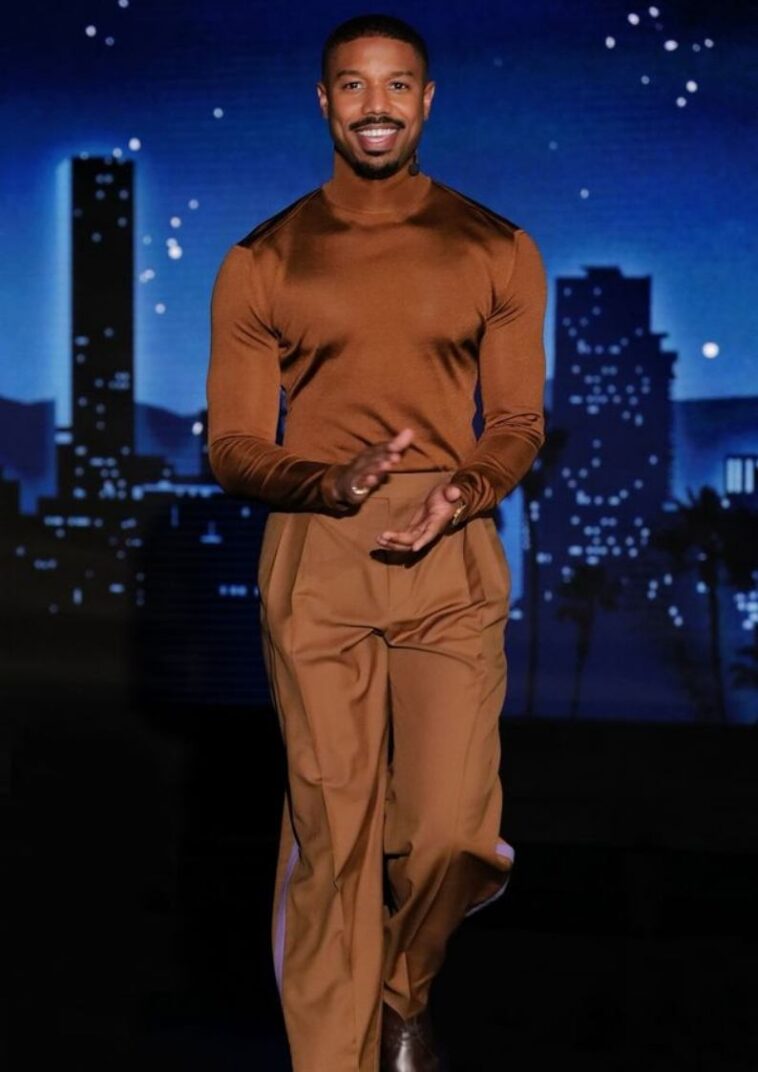
Michael B. Jordan has established himself as one of the most talented and commercially successful actors of his generation, building a filmography that spans critically acclaimed dramas, blockbuster franchises, and groundbreaking cultural moments. His journey from television roles to global stardom represents one of Hollywood’s most impressive career arcs, defined by smart choices, physical dedication, and a willingness to challenge himself with each new project. Here are five key moments that define Michael B. Jordan’s remarkable career.
1. The Wire and Friday Night Lights – The Foundation
Before he became a movie star, Michael B. Jordan established his dramatic credentials through two of the most acclaimed television series of the 2000s. His role as Wallace in Season 1 of The Wire introduced audiences to an actor capable of conveying devastating emotional depth at a remarkably young age. Wallace’s tragic story arc required Jordan to portray innocence, fear, and the heartbreaking consequences of systemic poverty with a maturity that belied his years.
His subsequent role as Vince Howard in Friday Night Lights further demonstrated his range, this time playing a talented quarterback navigating the pressures of small-town Texas football culture, family expectations, and the pursuit of a college scholarship. These television roles built a foundation of serious dramatic credibility that would prove invaluable as he transitioned to film work, giving directors and producers confidence that he could handle complex, emotionally demanding material at any scale.
2. Fruitvale Station – The Breakthrough
Ryan Coogler’s Fruitvale Station (2013) was the film that announced Michael B. Jordan as a major dramatic talent to the wider world. Based on the true story of Oscar Grant III, a young man shot and killed by a transit police officer in Oakland, California, on New Year’s Day 2009, the film required Jordan to humanize a real person whose life had been reduced to headlines and protest slogans. His performance was devastating in its intimacy, presenting Grant as a fully realized human being – imperfect, loving, trying to do better – rather than a symbol or a statistic.
Related Reading
The film premiered at Sundance to standing ovations and launched the Coogler-Jordan creative partnership that would prove to be one of the most important in modern American cinema. Jordan’s ability to make audiences feel the weight of Grant’s humanity made the film’s inevitable conclusion almost unbearably painful, demonstrating the kind of emotional power that separates good actors from truly great ones.
3. Creed – The Star Turn
Reuniting with Ryan Coogler for Creed (2015), Jordan took on the challenge of playing Adonis Creed, the son of Apollo Creed from the Rocky franchise. The role required him to carry a beloved franchise forward while making it entirely his own – a challenge that has defeated many actors who attempted to step into legendary shoes. Jordan succeeded spectacularly, delivering both the physical authenticity of a professional boxer and the emotional complexity of a young man grappling with his father’s legacy.
4. Black Panther – The Iconic Villain
As Erik Killmonger in Black Panther (2018), Jordan created one of the Marvel Cinematic Universe’s most compelling and sympathetic villains. Killmonger’s motivations – anger at systemic racism, pain from personal loss, and a radical vision for using Wakandan power to liberate oppressed people worldwide – resonated with audiences who found themselves uncomfortably sympathizing with the antagonist. Jordan’s physical transformation and charismatic performance elevated what could have been a standard comic book villain into a figure of genuine cultural significance.
5. Directing Creed III – Behind the Camera
Michael B. Jordan’s directorial debut with Creed III marked his evolution from in-front-of-the-camera talent to complete filmmaker. The film demonstrated his visual ambition, incorporating anime-inspired fight choreography and intimate character work that proved he could command both the artistic and commercial aspects of major studio filmmaking. The film’s box office success, grossing over $275 million worldwide, validated Jordan’s move into directing and suggested that his influence on Hollywood would extend well beyond his acting career.