



 Fenny Gandhi
The Eiffel Tower stands as the most recognizable landmark in the world, a wrought-iron masterpiece that has symbolized Paris and France for over 135 years. Built as a temporary exhibit for the 1889 World’s Fair, the tower was originally meant to stand for just 20 years before being dismantled. Instead, it became the most visited paid monument on Earth, attracting nearly 7 million visitors annually and serving as the ultimate symbol of romance, engineering achievement, and cultural identity. Here is everything you need to know about this extraordinary structure.
History and Construction
The Eiffel Tower was designed by Gustave Eiffel’s engineering company and built between 1887 and 1889. The construction was remarkably efficient for such an ambitious project – using over 18,000 individual iron pieces, 2.5 million rivets, and a workforce of approximately 300 workers on-site, the tower rose from the Champ de Mars in just over two years. At 330 meters (1,083 feet) tall including its antenna, it was the tallest structure in the world upon completion and held that record for 41 years until the completion of the Chrysler Building in New York City in 1930.
The decision to build the tower was controversial from the start. Many of Paris’s most prominent artists and intellectuals signed a petition opposing the construction, calling it an “odious column of bolted metal” that would disfigure the city’s beautiful skyline. Writer Guy de Maupassant reportedly ate lunch at the tower’s restaurant regularly because it was the only place in Paris where he could not see the tower. Despite the opposition, the tower proved immensely popular with the public from its opening day, and the critics gradually fell silent as the structure became inseparable from Paris’s identity.
Engineering Marvel
The engineering behind the Eiffel Tower was groundbreaking for its time and remains impressive by modern standards. Gustave Eiffel and his team used advanced mathematical calculations to determine the optimal shape for wind resistance, resulting in the tower’s distinctive curved profile. The base is anchored by massive concrete and limestone foundations that extend to a depth of 15 meters, ensuring stability despite the structure’s enormous height and the wind forces acting upon it.
Related Reading
The tower’s lattice structure is not merely aesthetic – it is a brilliant engineering solution that provides maximum strength with minimum material. The open design allows wind to pass through the structure rather than push against a solid surface, reducing wind loads by approximately 50 percent compared to a solid structure of similar dimensions. On hot days, the metal expands and the top of the tower can lean up to 18 centimeters away from the sun, a phenomenon that visitors rarely notice but engineers must account for in maintenance calculations.
Visiting the Eiffel Tower
The Eiffel Tower offers visitors three accessible levels, each providing a different perspective on Paris. The first floor (57 meters) features a glass floor section that allows visitors to look straight down to the ground below, a restaurant, and an exhibition about the tower’s history. The second floor (115 meters) offers some of the best views of Paris, with the city spread out below in a panorama that includes every major Parisian landmark. The summit (276 meters) provides breathtaking 360-degree views that can extend up to 72 kilometers on clear days.
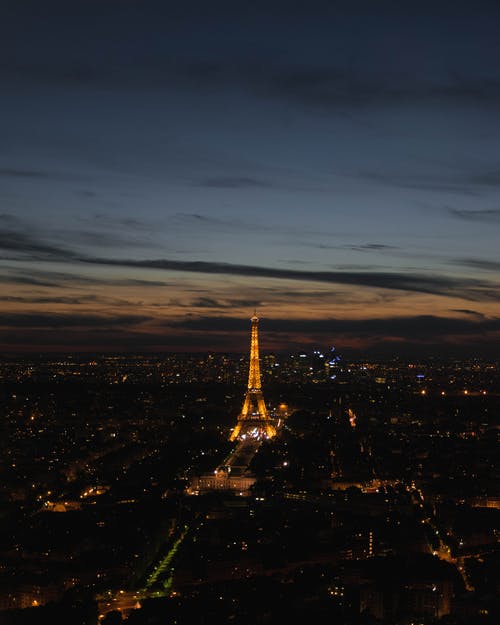
Visitors can reach the first and second floors either by elevator or by climbing 674 steps from the ground, an experience that provides a unique appreciation for the tower’s scale and engineering. The summit is accessible only by elevator. Tickets can be purchased online in advance (strongly recommended) or at the tower, with prices varying depending on whether you choose stairs or elevator and which levels you wish to visit. The tower is open daily year-round, with extended evening hours during summer months when the sparkling light show illuminates the structure every hour after dark.
Cultural Significance
The Eiffel Tower transcends its function as a tourist attraction to serve as one of humanity’s most powerful cultural symbols. It appears in countless films, photographs, paintings, and advertisements as shorthand for romance, sophistication, and the allure of Paris. The tower has witnessed major historical moments, served as a radio transmission tower during both World Wars, and survived threats of demolition, Nazi occupation, and the passage of time to emerge as an enduring symbol of human creativity and ambition. Today, the Eiffel Tower remains not just a monument to 19th-century engineering but a living testament to the power of bold vision to create beauty that endures across generations.