



 Shraddha Diwan
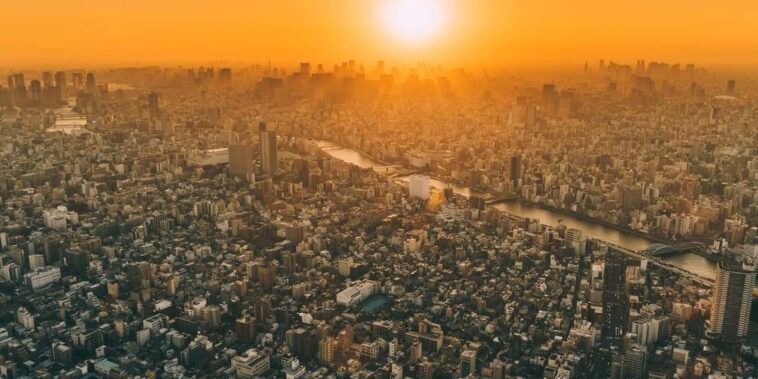
The question of which is the biggest city in the world has a more complex answer than you might expect, because the answer depends entirely on how you define “biggest.” By different measurements – population within city limits, metropolitan area population, urban agglomeration, or geographic area – different cities claim the top spot. This guide explores the world’s largest cities across multiple metrics, revealing the fascinating diversity of urban life on our increasingly urbanized planet.
By Metropolitan Area Population – Tokyo
The Greater Tokyo Area holds the distinction of being the most populous metropolitan area in the world, with approximately 37 million residents in the greater metropolitan region. The area encompasses Tokyo proper along with neighboring prefectures including Kanagawa, Saitama, and Chiba, forming an urban expanse that is home to nearly a third of Japan’s entire population. Despite its enormous size, Tokyo functions with remarkable efficiency, thanks to one of the world’s most sophisticated public transportation systems, meticulous urban planning, and a cultural emphasis on order and consideration for others.
Tokyo’s urban landscape is a study in contrasts. The neon-lit streets of Shibuya and Shinjuku represent the hypermodern face of the city, while neighborhoods like Asakusa and Yanaka preserve the atmosphere of old Tokyo with traditional temples, narrow lanes, and family-run shops. The city’s food scene alone, with more Michelin stars than any other city on Earth, is a testament to the depth and sophistication of its urban culture. Living in Tokyo means having access to world-class cuisine, entertainment, culture, and technology within one of the safest major cities in the world.
By City Proper Population – Chongqing, China
If measuring by population within official city limits, Chongqing in southwestern China leads the world with approximately 32 million residents within its municipal boundaries. However, this number requires context: Chongqing’s municipal area covers over 82,000 square kilometers, much of which is rural farmland and mountainous terrain. The city’s urban core is home to approximately 10 million people, which is impressive but not record-breaking. Chongqing’s classification as the world’s largest city by administrative population reflects China’s unique municipal governance structure rather than a single continuous urban area.
Despite the statistical asterisk, Chongqing is genuinely one of the world’s most impressive cities. Built at the confluence of the Yangtze and Jialing rivers, the city is famous for its dramatic hilly topography, spicy Sichuan cuisine, and rapid modernization that has transformed it from a relatively obscure inland city into a major economic hub. The city’s nighttime skyline, with skyscrapers built into mountainsides and bridges spanning deep river gorges, creates one of the most visually spectacular urban landscapes anywhere in the world.
By Geographic Area – Hulunbuir, China
The largest city by land area is Hulunbuir in Inner Mongolia, China, which covers an astonishing 263,953 square kilometers – larger than the entire United Kingdom. Like Chongqing, this reflects China’s administrative classification system rather than a continuous urban area. Hulunbuir is overwhelmingly rural, with vast grasslands, forests, and sparse settlements spread across its enormous territory. Among more conventionally defined cities, Wuhan, Beijing, and Jakarta rank among the geographically largest.
The Fastest Growing Megacities
While established megacities like Tokyo, Delhi, and Shanghai continue to grow, the fastest urban growth is occurring in cities that many Westerners have never heard of. Lagos, Nigeria is projected to become the world’s largest city by 2100, with explosive population growth driven by Nigeria’s demographics. Dhaka, Bangladesh; Kinshasa, Democratic Republic of Congo; and Dar es Salaam, Tanzania are also growing at rates that will reshape the global urban hierarchy in the coming decades.
These rapidly growing cities face immense challenges including infrastructure development, housing shortages, transportation systems, water and sanitation services, and employment creation for millions of new urban residents annually. How these cities manage their growth will have enormous implications for global sustainability, economic development, and human welfare throughout the 21st century.
The Future of Global Urbanization
By 2050, an estimated 68 percent of the world’s population will live in urban areas, up from 56 percent today. This ongoing urbanization will reshape which cities qualify as the “biggest” and challenge existing infrastructure, governance, and sustainability models. Understanding the diversity of the world’s largest cities – from the hyper-efficient density of Tokyo to the sprawling growth of Lagos – is essential for anyone interested in the future of human civilization on an increasingly urban planet.